


Medena Commerce: “When business is at its toughest, we find the right path as a family”

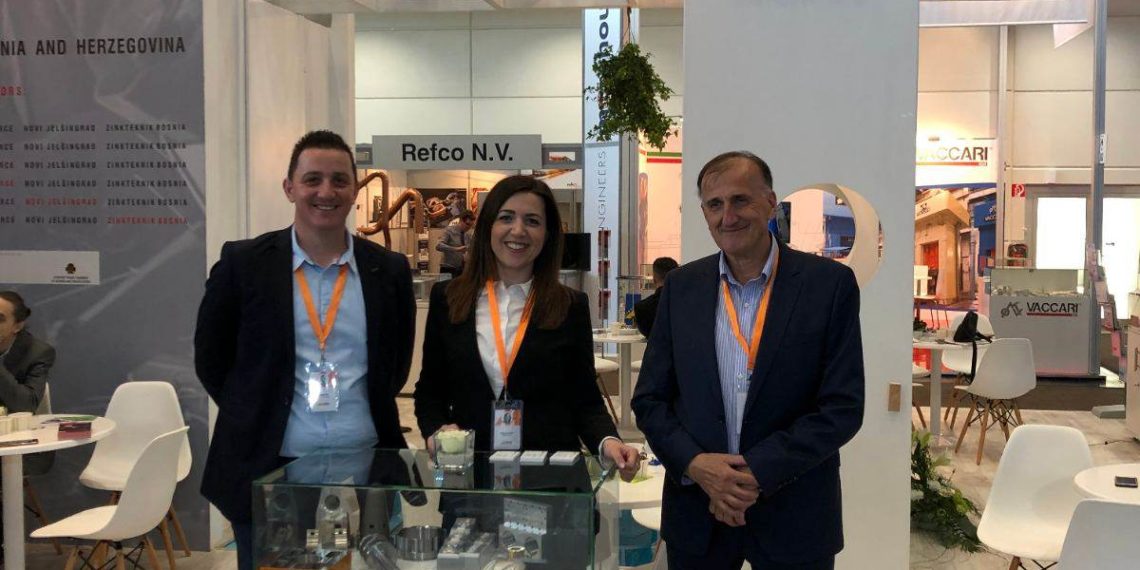
The Tešanj-based company “Medena Commerce” will host the general conference of the metal industry “PIT MetalCon 2023”, which will be held on May 25 and 26.
Ahead of this important event, we spoke with Fikret Ireiz, Director, Admir Ireiz, Production Manager, and Selma Bradarić, Sales Manager of the company.
How was “Medena Commerce” founded and how has it developed?, what does it mean to truly grow a family business?, what are the main obstacles facing the metal industry on the path to greater competitiveness?, and what does a manager’s workday look like? These are some of the questions we discussed with this dedicated and successful team.
PIT: 20 years of experience, 70 highly specialized employees, 20 business partners across Europe – these are truly significant figures of your business. What was the journey like to reach this position?
Fikret Ireiz: In the post-war years, I tried my hand at trade. It was a very simple and profitable business, with relatively easy earnings. However, it did not fulfill me: as a technical director in a company, I wanted to continue doing something closer to my profession—engineering and mechanical engineering. So, together with two associates, family members, alongside trade, I opened a small workshop. At that time, people from USAID came looking to invest in Bosnia and Herzegovina. I presented them with my idea, and within a short time we reached an agreement, so in 1998 we began an investment of around one million KM: we built a new hall and purchased 13 used machines, starting the business without any customers. After three to four months, the company faced difficulties in repaying the loan. As someone who had survived the war, I believed at that moment that the most important thing was to focus on repairs and that this would be the best business, so I based the business plan on that belief. However, what we were repairing, Bosnia and Herzegovina was receiving as donations—water supply systems, valves, and pumps. In short, our program failed. I then decided to try the European market. We had a hall, machines, 12 employees, we were struggling to repay the loan, and we had to find work, so in 2001 we made some contacts and began exporting to Germany, establishing our first contact with a customer for whom we still work today. In 2004, a crisis occurred in Germany due to their non-support of the American bombing of Iraq, which negatively affected our business as well. Fortunately, we overcame this quickly. Of course, during this period we also did a lot of work on the domestic market. In 2008, Selma graduated from university and began working at the company. That was when everything changed: she took over correspondence with foreign markets as well as project management. The following year, Admir joined us too, and I can freely say that from that moment on, everything started to improve. In 2010, we established contact with the automotive industry, and that marked the beginning of our more intensive development. From then until today, we have recorded several major investments, invested a great deal of effort into developing the organization, markets, and our closest associates, and now we are where we are. Today, we have 68 employees—mostly young people—and yes, we are fully export-oriented.
PIT: Medena Commerce is, we may freely say, a family business—a company you are building together with your closest family members. That is not so common today. How much does this fact mean to you and to others? Is it easier or more difficult to do business this way, and what do you consider crucial for the sustainability and success of a family business of any size and type?
Fikret Ireiz: For me, family support was very important—I raised it that way. It suited me, and I think I didn’t make a mistake. Family businesses, especially in the beginning, need the family. You may encounter problems, but you don’t lose your support. From the very start, my father, who was an excellent expert in accounting, supported me with those tasks. In the meantime, he passed that work on to my sister’s daughter, and she does it today. At one point, “Medena Commerce” had 18 family members employed, and more than half of the employees are related in some way, so we truly are a family company. For me, as someone who has achieved a certain level of success, the most important thing is that someone in the family looks up to it and tries—either they or their children, future generations—to build something similar. When things were at their hardest, we would always meet as a family and find the right path.
Selma Bradarić: My parents never influenced my choice of profession, especially not my father. My initial idea was to become a mathematics teacher, but already at the age of 18 I recognized an opportunity in the family business. I graduated from the Faculty of Economics and immediately got a job. I believe that a family business is a very good thing because you have support. Another positive aspect I would highlight is that every organization, every company, deals with internal conflicts—and we all know that the best ideas often arise from conflict. Sometimes someone even deliberately initiates a conflict to generate a good idea. When conflict situations or difficult moments occur in the company, we as a family always find it easier to forgive, forget, and move on. Admir and I are a great support to each other, and that means a lot in business. Another important element in business is trust. My father, Admir, and I don’t even have to think about it—as closest associates, we have complete trust in one another.
Just as it was difficult for their father to build the company and reach this level, it is equally challenging to maintain it today. You now carry the burden of what you receive and inherit. You also carry the responsibility of leaving something to your own children, should they wish to continue this business, as well as the pressure from the environment. Today, many believe that if children do not inherit their father’s company, neither the father nor the children are successful—which, in my opinion, is wrong. Everyone should be allowed to do what they truly want.
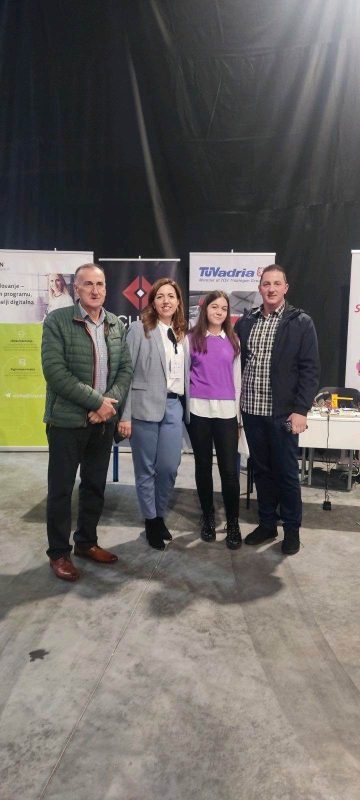
Admir: Unlike Selma, I never wanted to be a teacher or an economist. I could choose what I wanted to become, but I grew up around machines. By profession, I am a mechanical engineer, and I have been here with my father since the very foundations of the company, throughout high school and university. Our first employees were our uncles, and after them came their children—the circle continued in that way. At one point, we were all here; anyone from the extended family who was unemployed started working here. When I began working as a student and pupil, it was always nicer and easier for me to be here alongside my father—both with him and with the rest of the family, who were always there to explain things to me. In addition, we have many older employees in the company who have employed their relatives and children, and many people with the same surname. These are people who are connected, and you can feel that it is easier for everyone to work together. So we have a good combination of a family business at the top of the company and within its lower segments as well.
PIT: What does your workday look like, what tasks do you perform within the company, and how does the management process operate?
Selma Bradarić: My workday starts like most people’s—with coffee, of course. I need a half-hour morning ritual that I spend just for myself. After arriving at the company, I first deal with finances: I review financial reports and assign tasks to the colleagues who work in that area. After that, I review customer orders from the previous day. As for the operational part of the work, we always try to handle it in the first part of the day, when we are more effective and fresher, while the second part of the day is dedicated to meetings. These are mostly meetings with banks, suppliers, customers, or organizations, chambers, donors, and the like. We have established a division of work where I mainly deal with cooperation with these organizations, while Admir is in the production facility and focuses on manufacturing. I usually finish my workday between 15:30 and 16:00. I believe that until 14:00 is the most effective time for operational work, after which summarizing follows. When it comes to management, I have a strong team of colleagues who handle most things independently, of course with consultations when needed.
Admir Ireiz: I looked up to my father, so my workday starts very early. I remember that when he began this business, he would get up at 4 a.m. and work. My workday starts at 6 a.m., and I am usually the first to arrive at the company. First, I need to start the machines so production can begin. After that, I review the previous day’s performance—both in person and through internal records and digital tools—and then prepare for the current day. In the morning, we have a 15-minute briefing with the production manager and colleagues from production. I am primarily responsible for the welding department and partly for the assembly department. In these departments, there are responsible persons who can organize that part of the work. Currently, my main focus is monitoring material preparation, where I have daily communication with colleagues, as we have had many material-related challenges since the onset of COVID. At the end of the day, we have a review, filling out logs where we record daily outputs and preparations for the next day. My workday ends around 15:30 to 16:00.
PIT: What are the main obstacles that the metal industry in Bosnia and Herzegovina must overcome in order to achieve better competitiveness?
Fikret Ireiz: The metal industry in Bosnia and Herzegovina is very strong, with a solid history and expertise. It needs almost nothing except good leadership at the global level—with capable people leading the country and those who can understand the industry. Over the past 20 years, we have traveled across Europe, researching markets and onboarding customers. Today, we export continuously to 11 or 14 companies, with a total of 30 active customers. It’s important to recognize that the knowledge we have—both among the older generation and the younger generation growing alongside them—is more than sufficient. Exporting and working for Europe is not difficult at all; you just need people. We have overcome countless obstacles—I waited three to four years for a visa in front of the German embassy just to set foot in Europe and go there. We need nothing more—just to organize things properly and continue developing.
PIT: How much are automation, digitalization, and Industry 4.0 currently represented in the Bosnian and Herzegovinian metal industry? What have you done in this regard?
Admir Ireiz: When Industry 4.0 was first presented in the context of the metal industry, we attended a trade fair in Germany where we were impressed by everything we heard and saw. I remember returning to Bosnia and Herzegovina and saying, “Where am I—did I fall from the sky?” But over time, you realize that not everything is exactly as it is presented. As for the metal industry in Bosnia and Herzegovina, I believe it has progressed since the initial stages when it comes to Industry 4.0, and that over time things will continue to improve. As a region, we are somewhat more oriented toward manual labor, and I think that is a challenge. Regarding Medena Commerce, we are not fully digitalized yet, but we are moving in that direction. All our machines are CNC-based, we have software for programming and operating them, and we use various software tools for everyday work, which I consider a form of automation. We are trying in every way to make work easier and faster. We are currently working on a project focused on the digitalization of our company, and we are on the right path to completing it.
PIT: Why did you decide to host the PIT MetalCon 2023 conference? What benefits do you see for your company in such an event? What would you recommend to others in this regard?
Selma Bradarić: The idea for this conference came to me when the PIT Adria Summit was held in December last year. In our shared opinion, the conference was successfully organized in a production hall. The only thing I felt was missing were real machines, to provide a complete experience. That’s why I agreed with colleagues from Targer to organize the next gathering at Medena—of course, after discussing it with my father and Admir. Only later did we find out that it would specifically be a conference for the metal sector.
As for the benefits, we have just discussed how closely we are tied to the family business and how present we must be in it. Very little time remains for attending such events—both for us and for our young engineers. This is an ideal opportunity to bring such an event into our company, allowing everything to take place around us for two days, so that we can be present at all times. Another important aspect is that companies in Bosnia and Herzegovina—whether family businesses from various industries or companies from the metal sector—rarely connect, socialize, and exchange opinions. For us, it is very important to host our acquaintances from this field, to meet over those two days, exchange experiences, and primarily talk about positive topics. Potentially, we can also discuss problems, challenges, and what we may face in the future. I would recommend others to remain as open as possible to such events. Sometimes it may be more worthwhile to sacrifice a few hours of work—or company time over the course of a year—to organize an event like this. You will likely gain many other benefits in return. And yes, I would like to take this opportunity, on behalf of Medena Commerce, to invite our friends and business partners to join us on May 25 and 26—above all to meet and socialize, and I believe there will be no shortage of knowledge.