Medena Commerce, a factory where machines are treated with respect

Everyone should, at least once in their life, meet a man like Mr. Fikret Ireiz. Without any ulterior or hidden interest, realizing that we share the world with such people is a joy that enriches life: he is a man whose life experience has flowed into a measured, refined, and dignified demeanor, with nobility becoming the standard of his relationships with others. Raised in a different era, yet fully understanding the here and now, he is the founder and owner of the family company Medena Commerce, a strong Bosnia and Herzegovina–based, export-oriented metal processing company from Tešanj. After years of investment, he is now living an important and fulfilling experience: sharing the responsibilities of leading both the family and the business with his children, Selma Bradarić and Admir Ireiz.
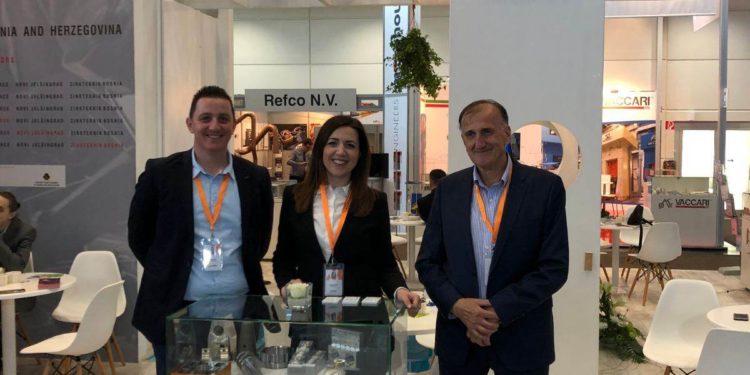
Two generations at the helm of Medena Commerce: Admir Ireiz, Selma Bradarić, Fikret Ireiz / PHOTO: Courtesy of S. BradarićMedena Commerce was founded in 1993 and was initially focused on trade. In 1995, the idea of launching a metal processing and repair workshop was born, and already in 1998, with the construction of the first production facility, the production of metal parts began.
Today, by all standards, it is a respectable modern factory whose production facilities were visited by the editorial team of the PIT.ba portal.
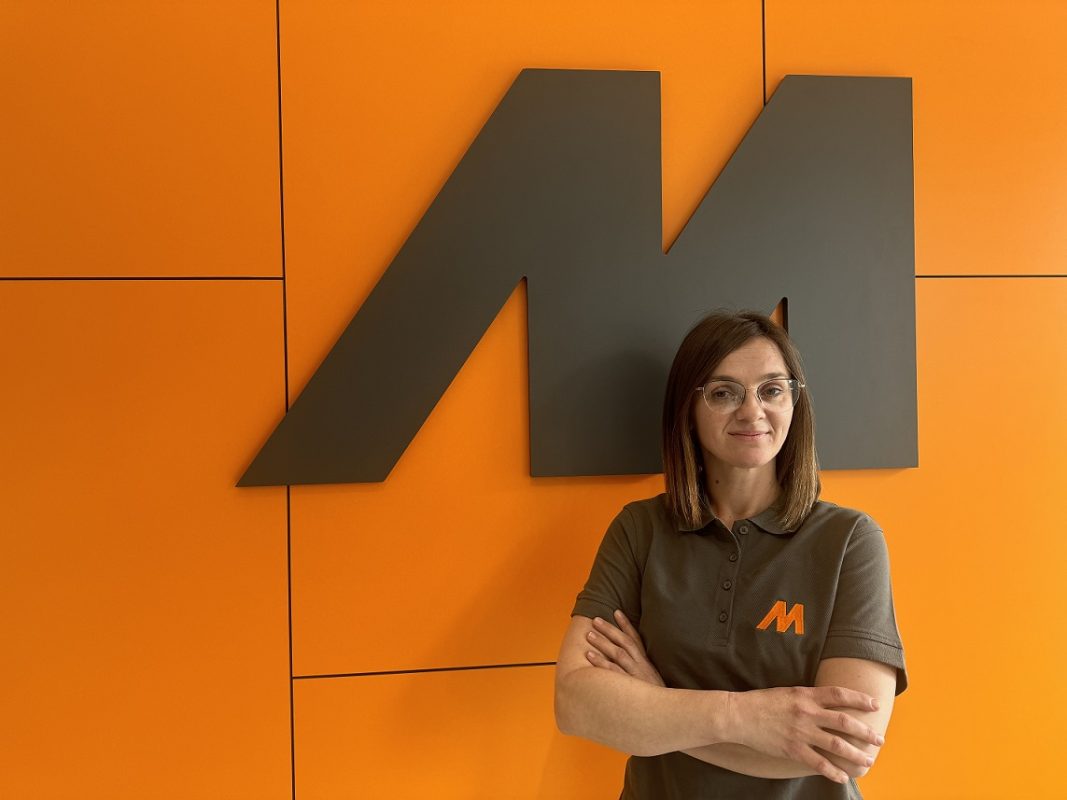
At the entrance to the production complex, alongside Mr. Ireiz, we were welcomed by Selma Bradarić, the company’s Sales Manager, and Armina Smajlhodžić, a mechanical engineer and Head of the Machining Department.
Factories—exemplified in a representative way by Medena Commerce—serve as chronicles of time, speaking about eras and people, bearing witness to tradition and aspirations for the future, and showcasing tools, technology, and modernity. Above all, and from the background, factories are living stories about the people who build them.
Above all, and from the background, factories are living stories about the people who build them
“Since our founding—and especially today, strengthened by our young team—we are focused on continuous growth and development, keeping up with trends in the metal industry, and implementing new technologies in metal processing. At the same time, the many years of experience of our senior colleagues, supported by younger generations, create the perfect combination for transferring knowledge and expertise, making us an invaluable and productive partner for our clients,” emphasized Selma Bradarić.
Entering the first machining production hall clearly shows this: right at the entrance, there are two classic lathes, worthy of an exhibition about time and technology, dedicated to the theme “How our factory was created and developed.”
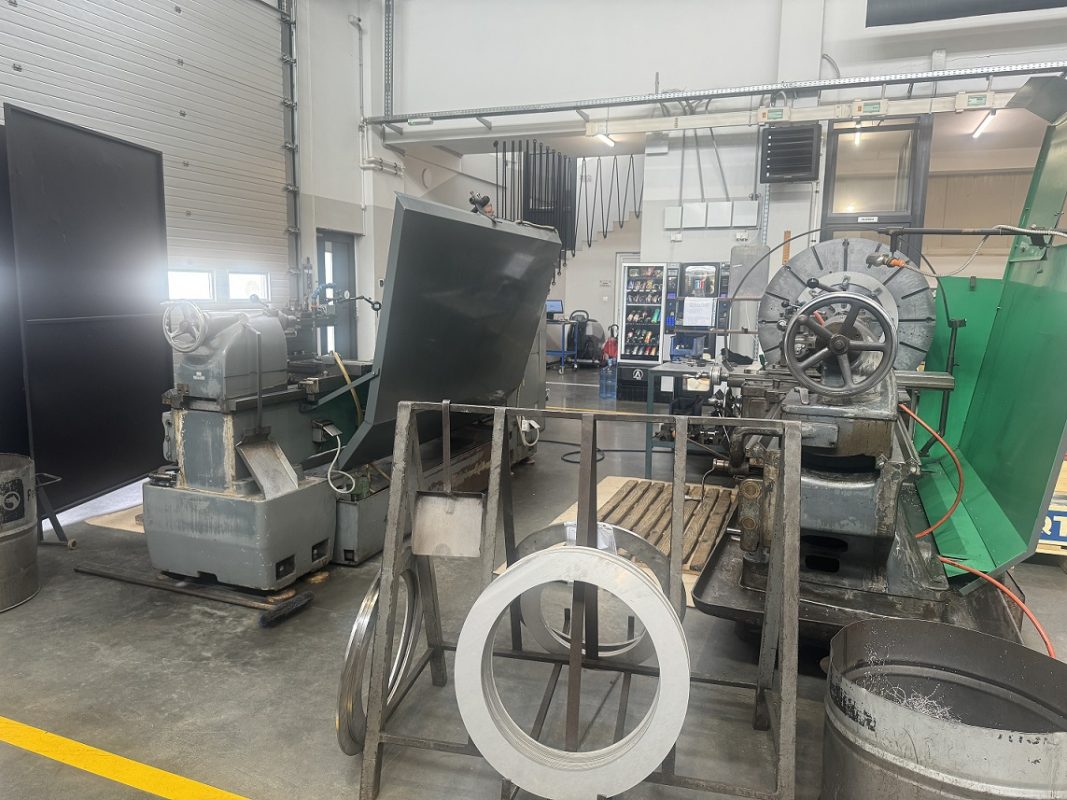
Classic lathes are the thread that connects heritage and the demands of the times, embodying the company’s commitment to preserving a three-decade-long tradition, as well as professionalism and loyalty
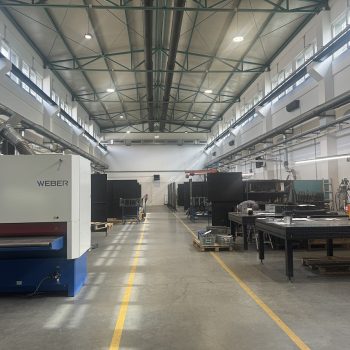
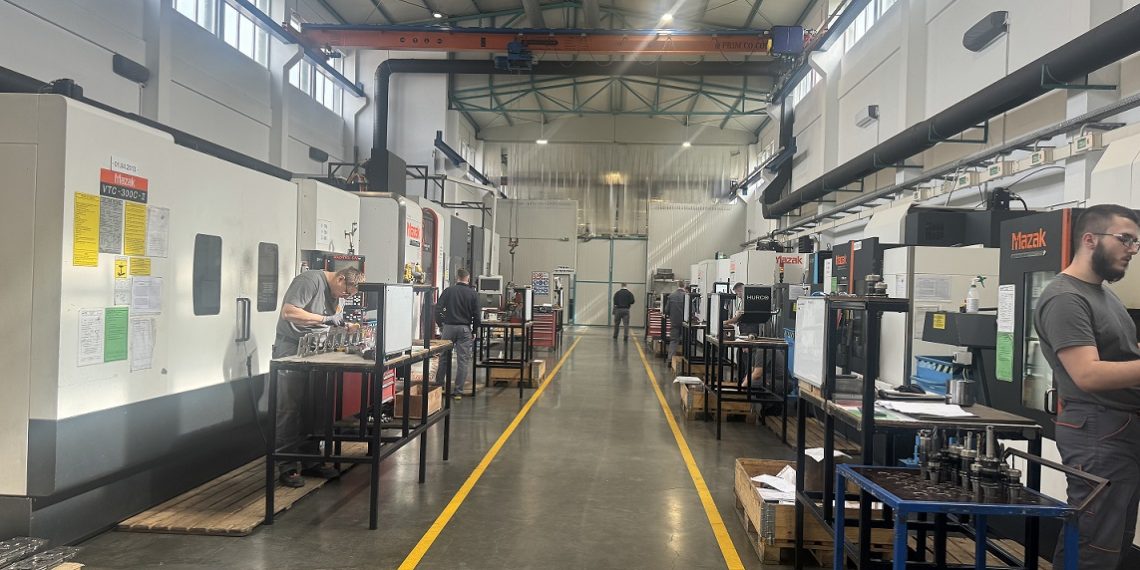
The machine park, as we will see while touring every corner of the factory, is modern and equipped with top-quality machines, arranged in an excellent layout. Together with skilled and well-trained personnel and well-organized processes, this contributes to the quality of operations, making Medena Commerce a worthy business partner for industries across Europe.
Classic lathes are the thread that connects heritage and the demands of the times, encapsulating the company’s commitment to preserving a three-decade-long tradition, as well as professionalism and loyalty.
“We intentionally kept these two classic lathes at the beginning for the needs of just one client—the very first client Medena started working with. They are still in operation, but they were deliberately left here so that it can be seen how work used to be done,” explains Smajlhodžić.
An appropriate layout, an equipment arrangement that enables smooth and effortless work as well as easy movement through the factory, emphasized by neatness, seems to be the only logical and possible solution. “Further along, one next to the other, arranged by size, are the CNC lathes. These are the newest lathes, delivered just five to six months ago,” she says.
In the well-organized space, next to each machine there are large bins containing assortments and components ready for further processing, shipment, or those that have just arrived. Every phase of the process is interconnected, so the production line never stops, not even for a moment.
“Our product range is wide, but it is important to us to work according to precise instructions. Here we can see that everything is proceeding according to the production plan: some components have been cut and are waiting for processing, others are ready. We monitor how items arrive and strictly adhere to delivery deadlines,” Smajlhodžić explains, describing the everyday life of a modern factory.
So that workers always know exactly what to do, each component comes from the customer with a clear and precise drawing. Regarding this, Smajlhodžić says: “Our programming is 3D; we do almost nothing manually. Everything is done using 3D techniques, and each drawing is accompanied by a technical sheet specifying the tools, clamping methods, and machining procedures. In this way, it is clear to the machine operators what needs to be done.”
Digitalization is a complex, ongoing process, but it is important and worthwhile. “We are doing a lot to digitalize our processes,” she says, pointing to work orders that indicate which processes need to be carried out, adding that “work begins and ends by scanning a barcode.”
We pass by the machines: diligent workers are operating some of them, while others stand still. She points to one and, with a slight touch of nostalgia, says it was put into operation in 2007. “It is the oldest CNC machine here. It was in service for a long time, but now it works like new,” she adds with a smile.
She points to one and, with a slight touch of nostalgia, says it was put into operation in 2007. “It is the oldest CNC machine here. It was in service for a long time, but now it works like new,” she adds with a smile.
Further along are what could be described as machining centers: large machines with three, four, and five axes used to process large parts. “Working on four-axis and five-axis machines is demanding, which is why the training process is longer and can take several months. These machines are different and allow for more complex work: while the machine is operating on one side, a part can be prepared on the other—clamped or otherwise readied—so that no time is lost. The machine simply changes the pallet and continues working. In addition, the programming is done manually,” she explains.
Speaking about training, she highlights that they also host high school students for practical training.
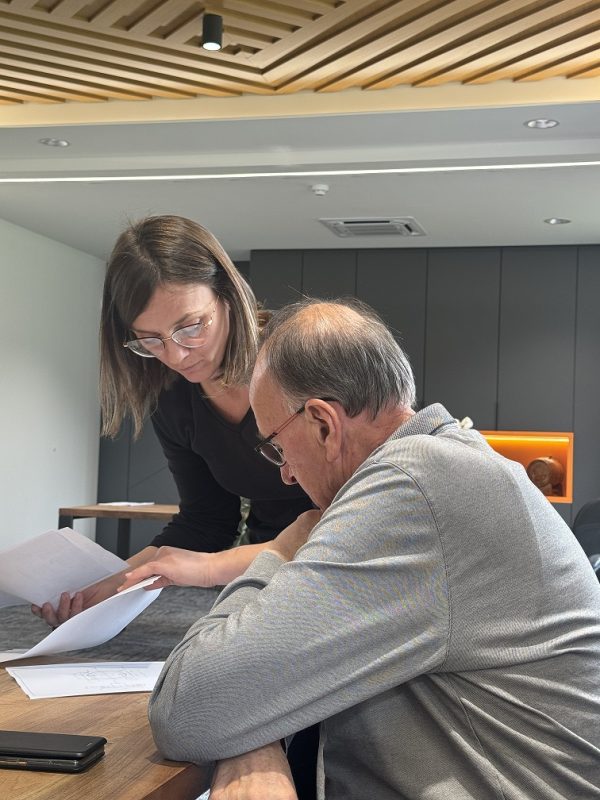
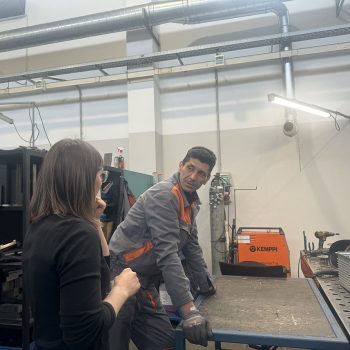
As our walk through the production hall continues, we gradually get used to the sounds. No longer focused on the noise, we now notice the openness and kindness of the employees: they do not stop working, but look at us with curiosity and warmth. Our attention is particularly drawn to a man sharpening the edges of components—by hand. “This is the final finishing. Some parts are thin and inaccessible to machines, so manual individual work and fine finishing are still irreplaceable,” Smajlhodžić explains. We ask this diligent man whether he gets tired. “The hands get a bit tired,” he laughs.
We notice that the production hall is well-ventilated. Our interlocutor is happy to share good practices and improvements implemented by her company: “We used to use an emulsion with mineral oils that oxidized in the machines. It would take about six months to deteriorate, bacteria would develop, and an extremely unpleasant odor would appear. We were forced to change the emulsion on all machines every six months to a year, which took a lot of time. Two years ago, we discovered an emulsion that does not contain mineral oils—it is based on synthetic oils and is transparent, with no noticeable odor. There is an issue with corrosion, but we found other ways of protection. Most importantly for the employees, we eliminated the unpleasant smell.”
“This is the final finishing. Some parts are thin and inaccessible to machines, so manual individual work and fine finishing are still irreplaceable,” Smajlhodžić says. We ask this diligent man if he has gotten tired. “The hands get a bit tired,” he laughs.
After the completion of one phase of the process, all components move on to the next steps: welding, processing, packaging, and dispatch. Dedicated and diligent staff ensure that the process runs flawlessly.
In the welding hall, preparation, welding, and cleaning take place. The familiar, characteristic sound of welding, short flashes of sparks everywhere—like magic. Here too, there are various machines: a straightening press, plate rolling machines, and sandblasting machines. In every part of the process, there is a clear effort to make the work easier—there are hoists, work tables adjusted to working height, as well as protective and auxiliary equipment. And here as well, accommodating workers—welders, and those performing sandblasting and cleaning—continue their work while showing understanding for our curiosity.
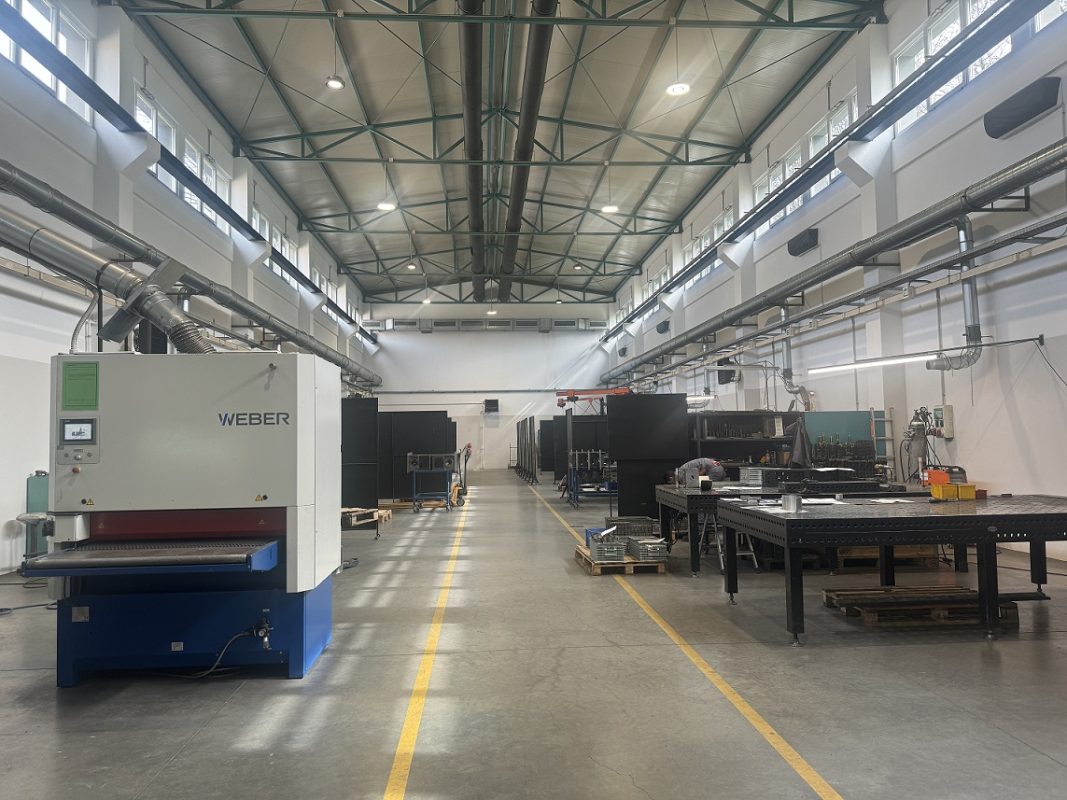
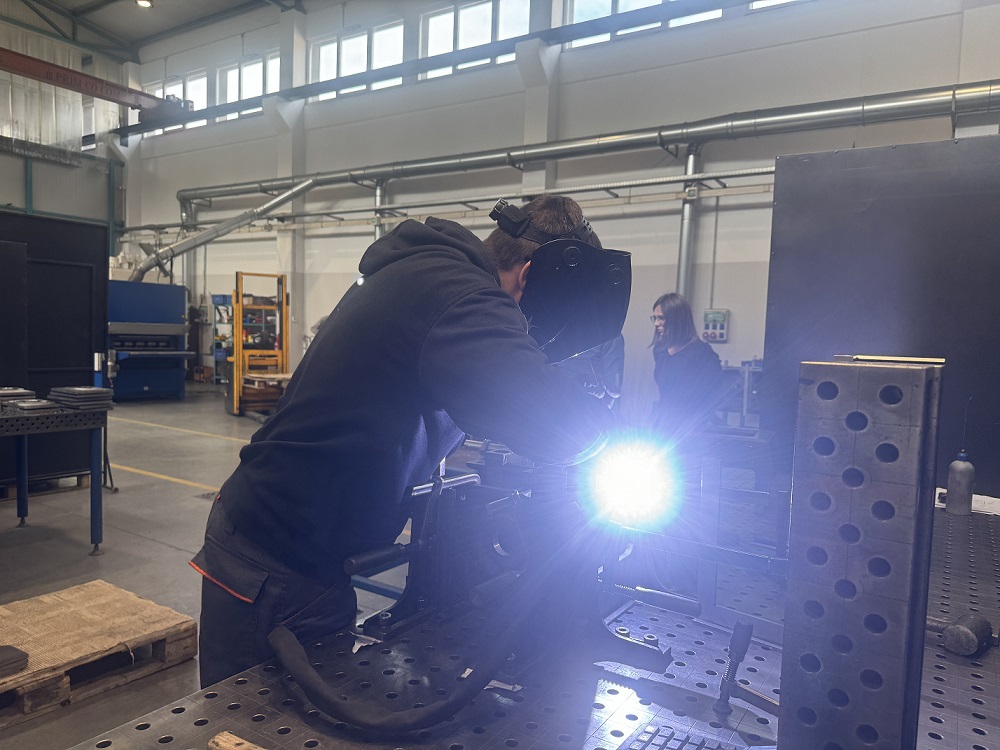
At the same time, tasks are assigned thoughtfully: younger workers operate the simpler machines, while more experienced staff handle welding and more demanding jobs.
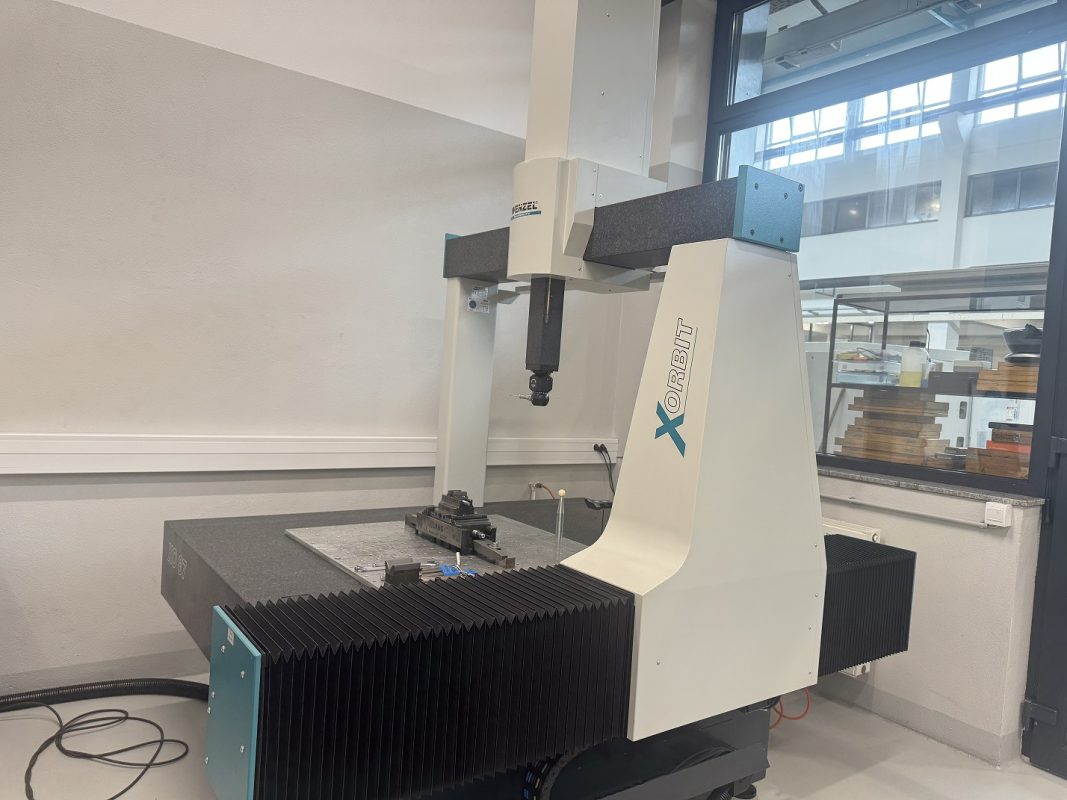
Alongside the machining production hall and the welding department, the complex also features a modernly equipped measurement room as well as a tool room fitted with tools and valuable, state-of-the-art precision devices.
Mr. Ireiz emphasizes: “In life, nothing is worth waiting for. We are committed to taking action, and everything we need will surely come our way.”
In the measurement room, it is quiet; most industries require extremely precise measurements, so measuring is a daily obligation. We also entered the technology office—the “brain of the plant”: this is where production preparation takes place, along with working and consultative meetings of engineers, technologists, toolmakers, and supervisors. “Here we resolve all the issues our employees face. We coordinate and plan our tasks,” Smajlhodžić says, adding that “on the measuring machines, we perform precise measurements and prepare the required measurement reports.”
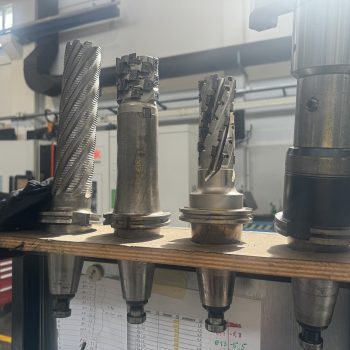
In the tool room, everything is thoughtfully placed and systematized: here, toolmakers prepare tools for the machines and issue them to employees based on the technology and the required program.
Finally, we also toured the assembly and finishing department. This is where final finishing and cleaning are carried out, threads are cut, and edges are chamfered. Packaging is done here, and this is where products are dispatched from.
Throughout the complex and the entire surrounding park—in the work of the employees and in the attitude of the employers and owners—there is a palpable sense of ease and mutual respect. At our farewell, Mr. Ireiz emphasized a valuable truth: “In life, nothing is worth waiting for. We are committed to taking action, and everything we need will surely come our way.”